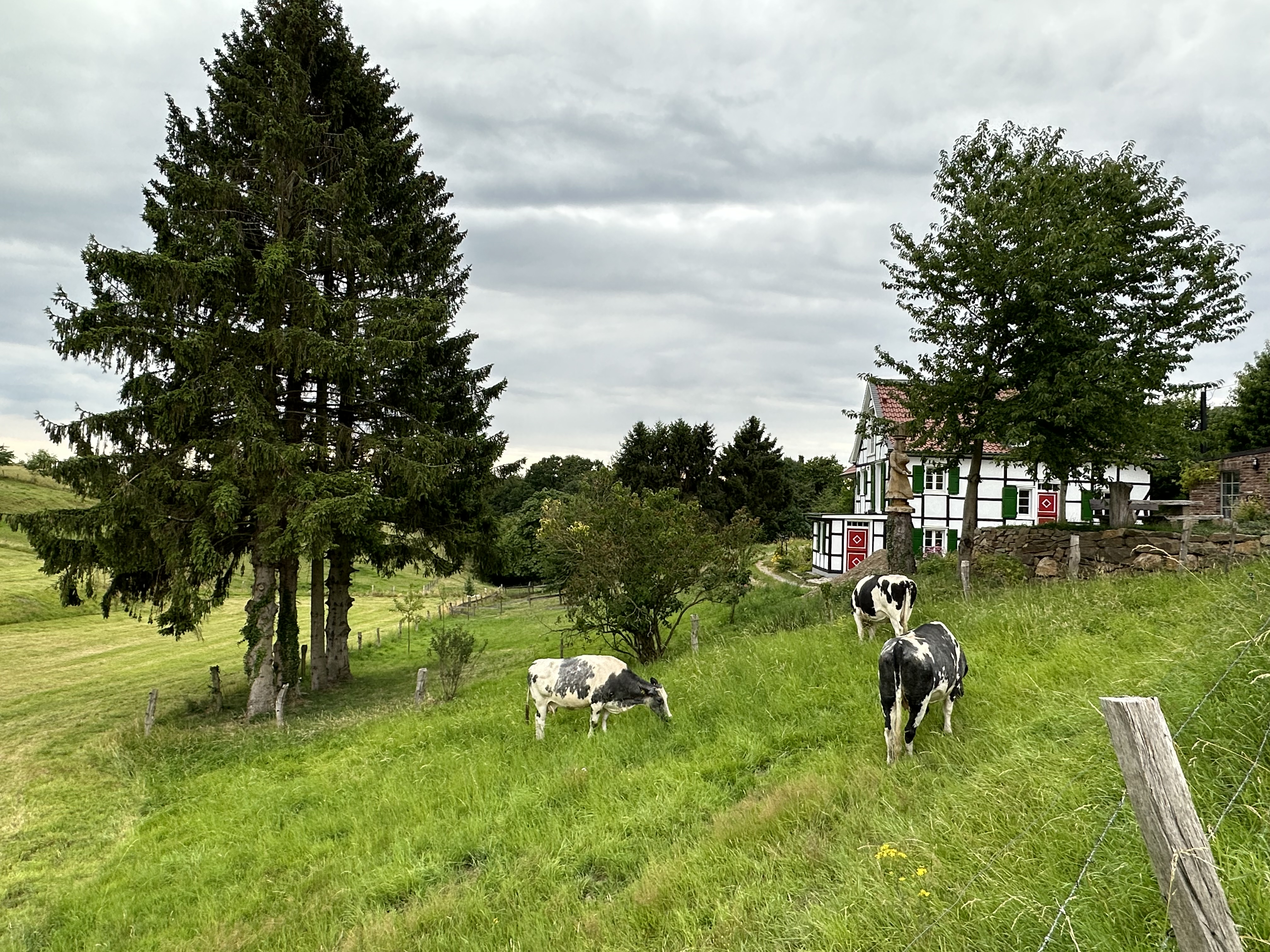
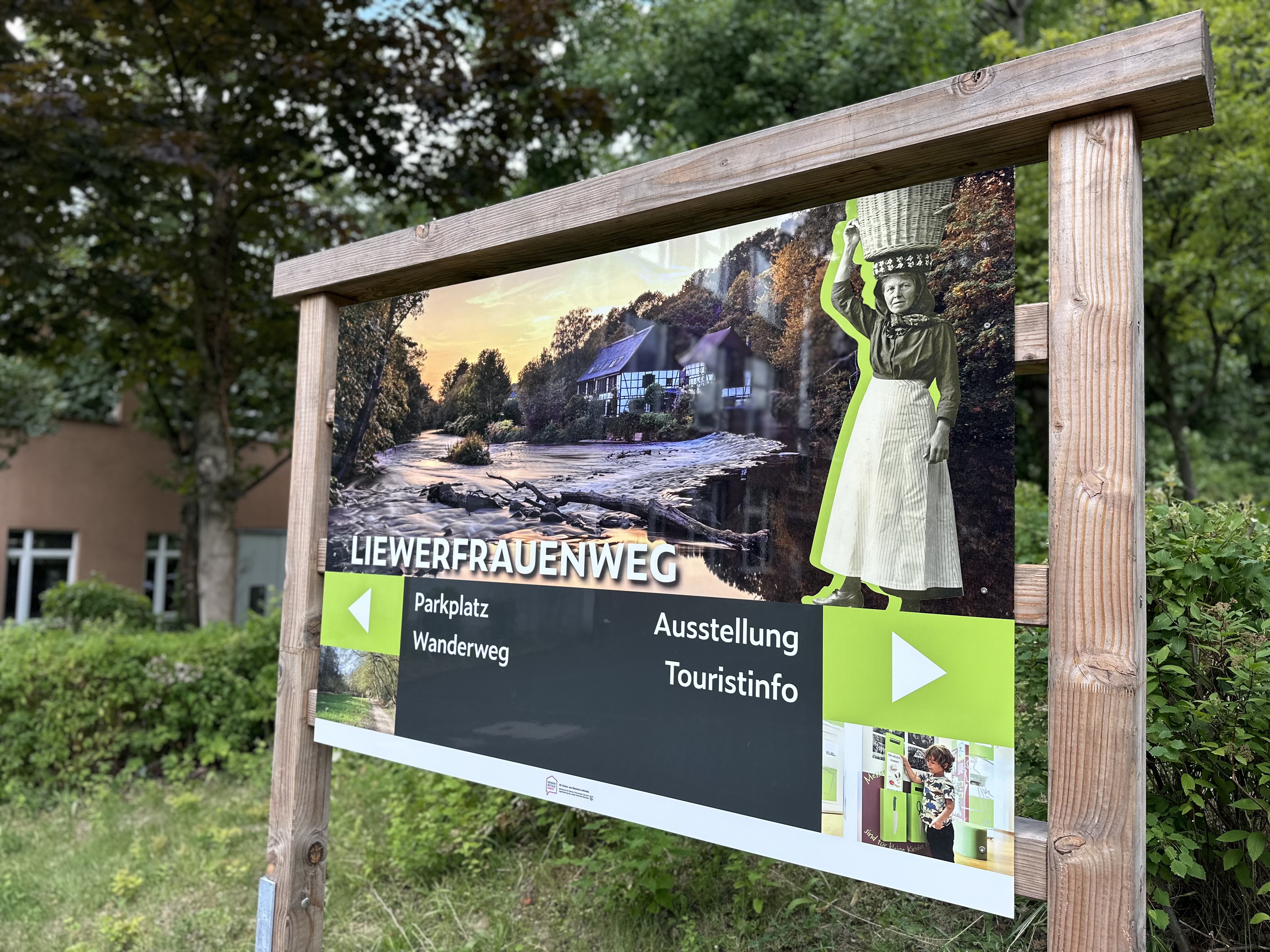
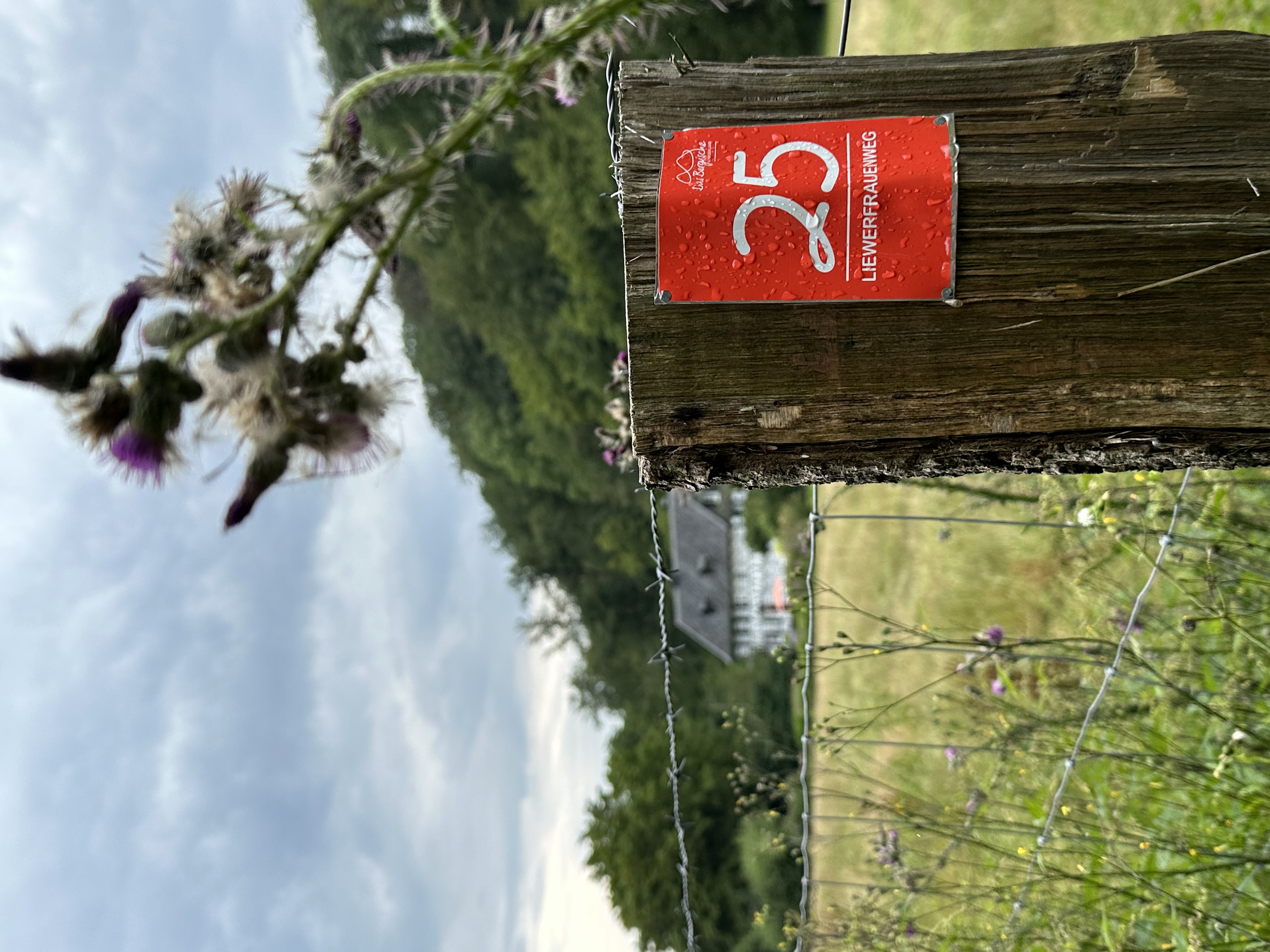
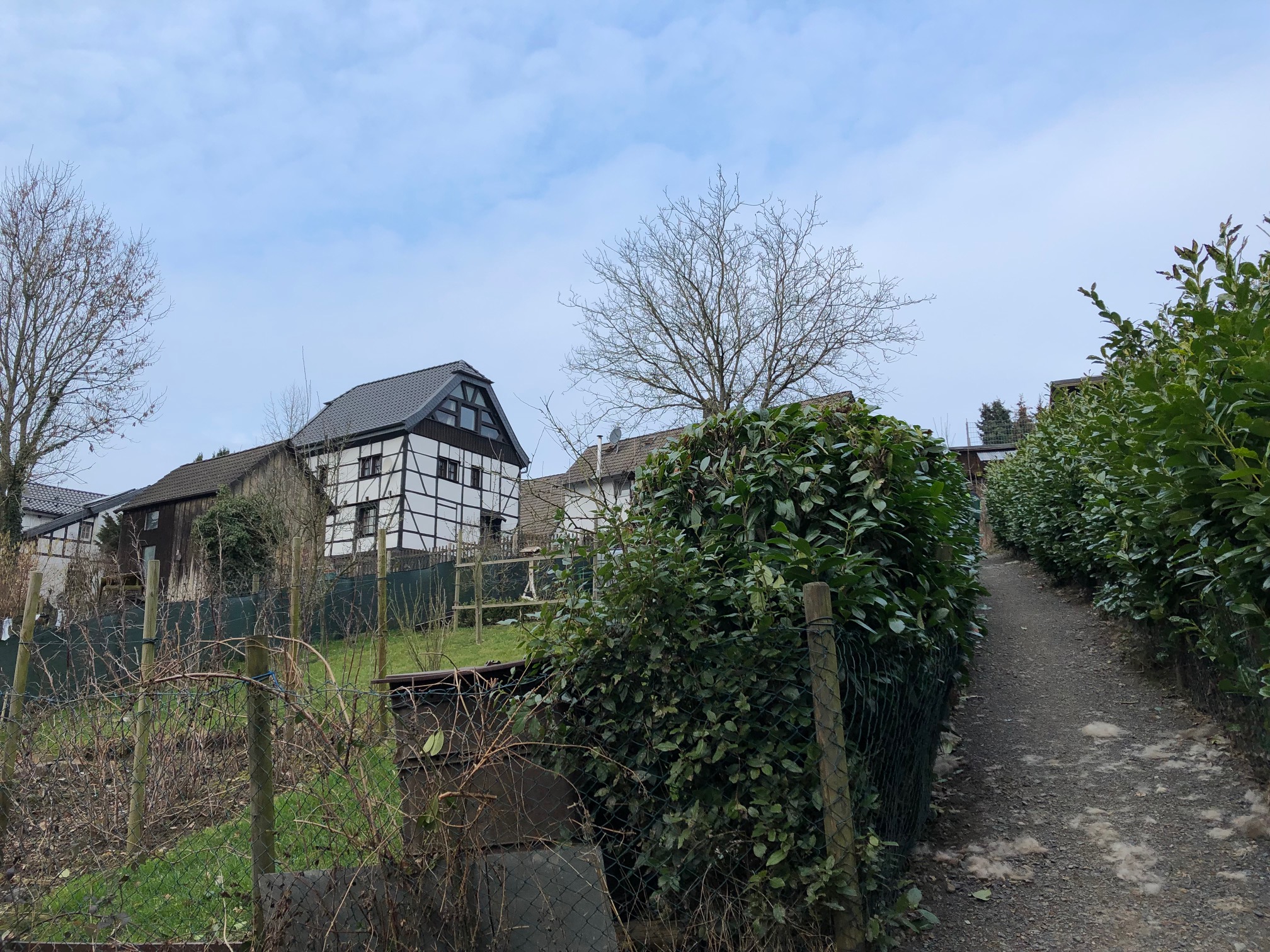
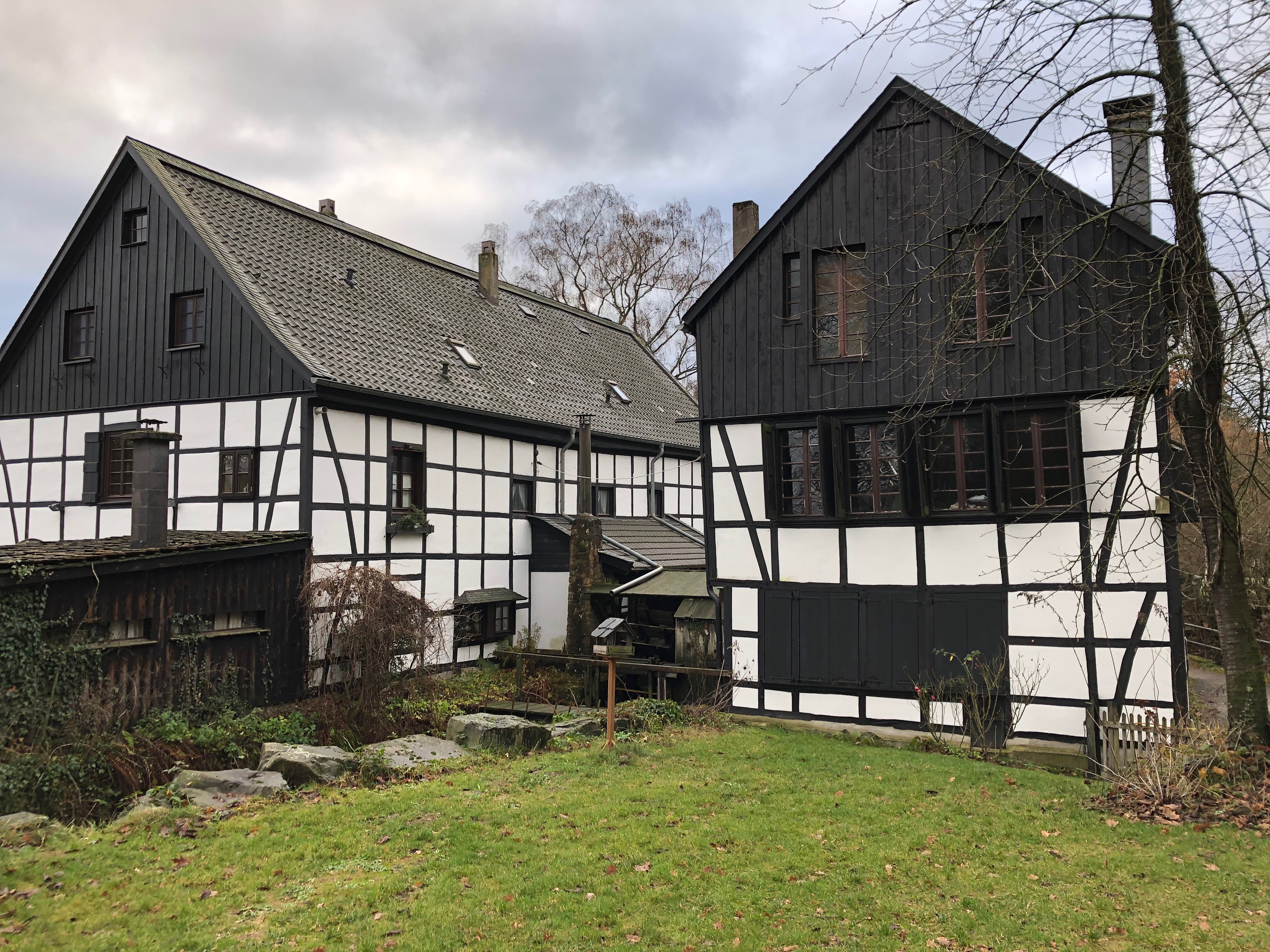
The walk starts at the Gründerzentrum. It still contains the delivery office of the Herder company, which received the goods of the Liewerfrauen. Founded as a company in 1727, the family business dates back to 1623. The route leads into the Pilghauser Bachtal valley and through the Oben-, Mittel- and Untenpilghausen farmsteads. The village, probably named after a pilgrimage route, is first recorded in 1334. Down in the forest, you can first see the Pilghauser Kotten and then the Neuenhauser Kotten, both dating from the middle of the 19th century.
The Nöhrenkotten, towards which the path then leads, already existed before 1715. The farms were converted into residential buildings, as was the Brücker mill further down the Nacker Bach. From the edge of the forest, you can see the manor house of the old moated castle of Schirpenbruch. The former knight's seat, feudal estate of the Counts of Berg and seat of the Schirpe family, dates back to the beginning of the 15th century. It is followed by the oil mill from 1685 and the Haasenmühle mill located below the estate of the same name. This already existed in 1711 and now houses a restaurant.
If you want to shorten or split the route, you can take the SB25 bus from the "Haasenmühle" stop to the "Technologiezentrum".
The hike continues to the Wipperaue and the Wipperkotten, which is located before the village of Wippe and belonged to the Nesselrode estate on the other side of the Wupper as early as 1605. The outer cottage of the double cottage complex is now used as an industrial and grinder museum. The sheepfold behind it no longer exists.
The Hohlenpuhler Weg, where a cottage also stood, leads to Friedrichsaue. Just before Friedrichstal, a hiking trail turns left into the forest and leads steeply up to Friedrichshöhe. At the top, you have an impressive view as far as the Rhine plain!
The trail leads over the Lache into the Weinsbergtal valley. At least 23 cottages or mills once stood there, strung along the stream like pearls on a necklace. Some of them, converted into residential buildings, still exist today. You will pass the 18th century Enderskotten and the Johänntgesbrucher mill from 1660, which once served as a grinding mill and fruit mill. The route then leads through dense forest. The Evertzkotten used to stand where a single house gleams between the trees. Nothing remains of the Lauterjungs-, Schaafen-, Claubergs- and Wüsthofskotten, and only the street of the same name bears witness to the Pereskotten. At the junction to Regerstraße, the path meets Küllenbergs Kotten. Before it was built in 1837, the Platzhofer mill stood there from 1720. The ensemble of buildings that can be seen today was built in 1885.
After crossing Platzhofstraße, you come to the residential building of the former Königsmühle. It was used as an inn for a long time. The mill itself is recorded as early as 1488 as Claismühle. Pass the former Königsmühler Kotten and turn left through the park and the Weegerhof savings and building association estate. Via Zweig-, Gas- and Grünewalder Straße you then return to the Gründerzentrum.